Chillers
Chillers produce chilled water that circulates through a building's air handling units and fan coils, using either an air-cooled or water-cooled condenser. NLS sources air-cooled and water-cooled chillers derated for the Saudi 50°C design ambient, sized in refrigeration tons, for hospital, hotel, and large commercial cooling plants across the Kingdom.
A chiller removes heat from water (or a water-glycol mix) circulating in a closed loop, then rejects that heat to outdoor air through an air-cooled condenser coil, or to a cooling tower loop through a water-cooled condenser and shell-and-tube heat exchanger. The chilled water leaves the machine at a set supply temperature, typically around 6-7°C for comfort cooling, and returns warmer after picking up heat at the building's air handling units and fan coils. Chiller capacity is rated in refrigeration tons or kW cooling, with compressor type, either scroll, screw, or centrifugal, chosen against the tonnage range and part-load profile the building needs.
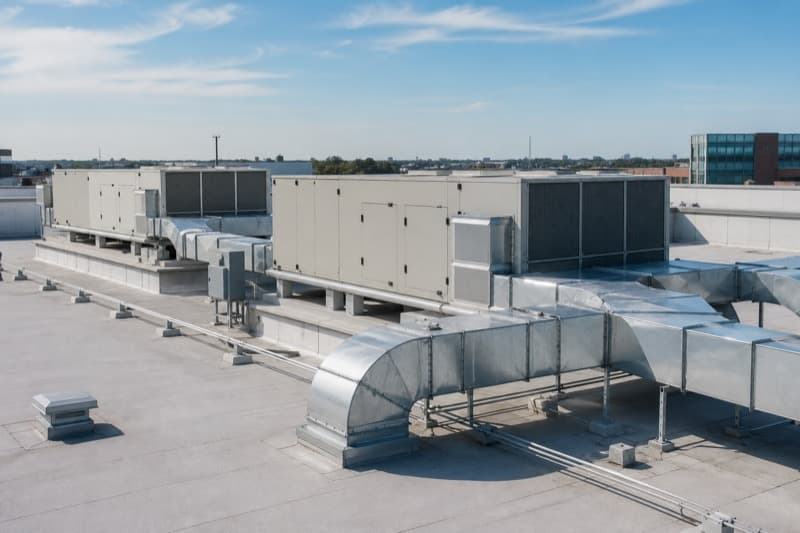
Air-cooled chillers reject heat directly to outdoor air and need no cooling tower or condenser water treatment, which suits sites with limited water availability or where a rooftop or ground-level plant footprint is the only option. Their condenser fans and coils are rated at a standard ambient, commonly 35°C or 40°C, and a 50°C Saudi summer design ambient pushes the machine into a derated condition where compressor lift increases and rated capacity drops; NLS sizes the chiller plant against this derated output rather than the catalog tonnage. Water-cooled chillers reject heat to a cooling tower loop instead, holding condenser temperature closer to the wet-bulb design point rather than the higher dry-bulb ambient, which generally holds capacity better in Saudi summer conditions but adds the cooling tower, condenser water pumps, and water treatment as additional plant items and ongoing water consumption.
Saudi hospital and large commercial projects typically specify a chiller plant with standby capacity, N+1 machines so one unit can be serviced or fail without losing the full cooling load, and this redundancy requirement shapes the individual machine tonnage selection as much as the total building load does. Water quality and scaling in cooling tower loops also gets more attention in Saudi conditions given regional water hardness, which affects the heat exchanger maintenance interval a project's facilities team should plan around.
Sourcing runs from a cooling load schedule. A project's mechanical consultant issues total tonnage, chilled water supply/return temperatures, and whether an air-cooled or water-cooled configuration is specified, and NLS returns chiller selection and a priced quote in USD with lead time set by the tonnage, compressor type, and whether the unit is a standard factory package or built to a specific plant room footprint.
Specifications
- ✓Configuration: air-cooled (integral condenser) or water-cooled (with cooling tower loop)
- ✓Compressor types: scroll, screw, or centrifugal, matched to tonnage range and part-load profile
- ✓Capacity rated in refrigeration tons or kW, derated for 50°C Saudi summer design ambient on air-cooled units
- ✓Chilled water supply/return temperatures set to project mechanical design, typically 6-7°C supply for comfort cooling
- ✓N+1 standby configurations available for hospital and critical-facility plants
- ✓Standards referenced: applicable IEC/ISO electrical and mechanical component ratings per project spec
Frequently Asked Questions
Who supplies chillers for hospital and commercial projects in Saudi Arabia?+
NLS sources air-cooled and water-cooled chillers sized against the 50°C Saudi design ambient, including N+1 redundant configurations hospital and large commercial plants typically specify.
Should I choose an air-cooled or water-cooled chiller in Saudi Arabia?+
Air-cooled units avoid the cooling tower and water treatment but lose more capacity as ambient climbs toward 50°C. Water-cooled units hold capacity closer to the wet-bulb design point but add tower, pumps, and water treatment as ongoing plant items. The choice depends on site water availability and plant footprint.
What lead time should I expect for chiller delivery in KSA?+
Lead time depends on tonnage, compressor type, and whether the unit is a standard factory package or built to a custom plant room footprint. NLS confirms the figure once the cooling load schedule and configuration are set.
Who supplies Chillers in Saudi Arabia?+
NLS Power (Northlane Solutions Company) supplies Chillers across Saudi Arabia, including Riyadh, Jeddah, Dammam and Jubail. Send your specification and quantities to info@nlspower.com or info@northlanesolution.com for a quotation.