Fire Pumps
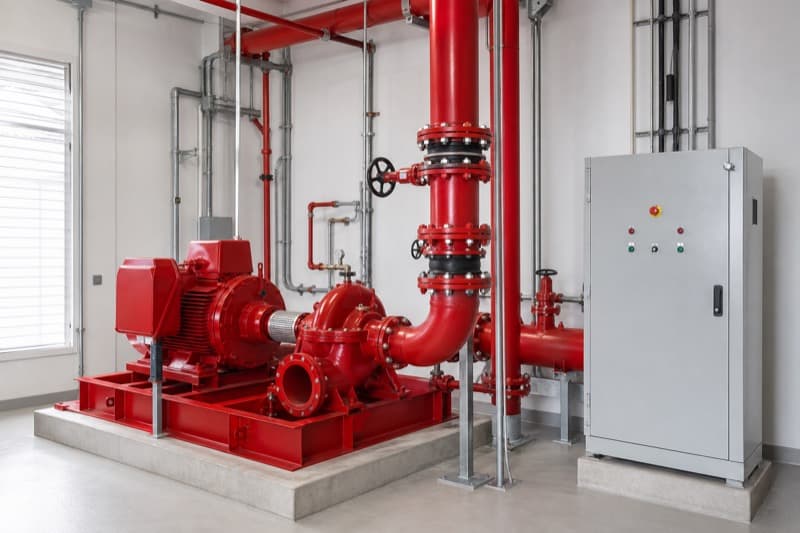
A fire pump raises municipal or tank water pressure to the flow and pressure a sprinkler or hydrant system needs during a fire, sized and tested to NFPA 20. NLS sources electric, diesel, and jockey fire pump sets for hospital and industrial fire protection systems in Saudi Arabia, built for Saudi Civil Defence approval documentation from the outset.
A fire pump set exists to close the gap between the water pressure a site's supply naturally delivers and the flow and pressure a fire suppression system, sprinklers, hose reels, or hydrants, needs to work as designed. NFPA 20 is the reference standard covering pump selection, driver type, and the acceptance testing a pump set has to pass before a fire protection system is signed off, and it typically calls for a duty pump (electric motor or diesel engine driven) paired with a smaller jockey pump that maintains system pressure on its own during small leaks, so the main pump doesn't cycle on and off for trivial pressure drops.
The choice between an electric motor driven pump and a diesel engine driven pump usually comes down to power reliability: an electric pump is simpler and cheaper to maintain where grid power is dependable, while a diesel-driven pump (or a diesel backup alongside an electric primary) removes dependence on grid power entirely, which is why many Saudi Civil Defence-reviewed designs for critical occupancies specify a diesel driver or a diesel-electric combination rather than a single electric pump alone.
Saudi Civil Defence (SCD) reviews and approves fire protection system designs before a building can be occupied, and NFPA 20 compliance, pump curve documentation, and factory or field acceptance test certificates are exactly the paperwork an SCD submission needs behind it. NLS scopes fire pump packages with that documentation trail built in from the order stage rather than assembled after the fact, which matters most on hospital projects, where fire pump reliability sits alongside emergency power and medical gas as a life-safety system regulators check first, and on industrial plants where a suppression system failure carries a direct process and safety cost.
A project team typically sends the required flow and pressure from the hydraulic calculation for the sprinkler or hydrant system, the driver type specified (electric, diesel, or both), and the site's power reliability, and NLS returns a matched pump set recommendation. Diesel-driven and larger custom-curve pump sets generally carry a longer lead time than a standard electric set, since the diesel engine and pump curve combination is built to the specific hydraulic demand rather than pulled off a generic shelf unit.
Specifications
- ✓Rated and tested to NFPA 20, covering pump selection, driver type, and acceptance testing
- ✓Driver types: electric motor, diesel engine, or a diesel-electric combination for redundancy
- ✓Jockey pump included to maintain system pressure and prevent unnecessary main pump cycling
- ✓Documentation package (pump curve, test certificates) scoped for Saudi Civil Defence submission
- ✓Suction source: municipal supply, fire water tank, or reservoir, matched to the site's water availability
- ✓Sized to the flow and pressure from the sprinkler or hydrant system's hydraulic calculation
Frequently Asked Questions
Should a fire pump be electric or diesel driven?+
It depends on power reliability and the occupancy's fire strategy. An electric pump costs less to maintain where grid power is dependable, while a diesel-driven pump removes dependence on grid power entirely, which is why many critical occupancies specify diesel or a diesel-electric combination rather than electric alone.
Who supplies NFPA 20 fire pumps for hospitals in Saudi Arabia?+
NLS sources electric, diesel, and jockey fire pump sets rated to NFPA 20, scoped with the documentation package Saudi Civil Defence submissions need, for hospital and industrial fire protection systems across the Kingdom.
What determines the size of a fire pump needed for a project?+
The hydraulic calculation for the sprinkler or hydrant system sets the required flow and pressure the pump has to deliver, not the building's size alone. Two similarly sized buildings with different sprinkler densities or hydrant demand can need noticeably different pump sets.
Who supplies Fire Pumps in Saudi Arabia?+
NLS Power (Northlane Solutions Company) supplies Fire Pumps across Saudi Arabia, including Riyadh, Jeddah, Dammam and Jubail. Send your specification and quantities to info@nlspower.com or info@northlanesolution.com for a quotation.