
Theatre Control Panels
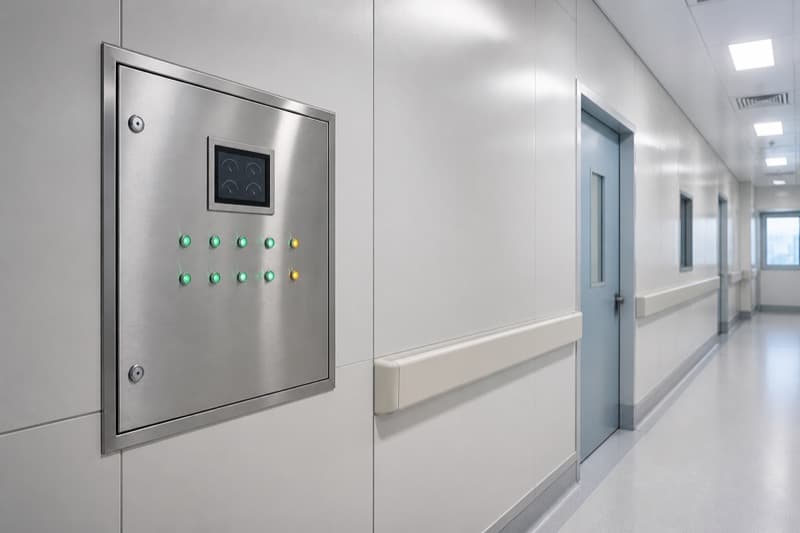
A theatre control panel is the single interface mounted at the OR entrance combining the LIM display, medical gas area alarm, and surgical lighting controls, so staff read isolated power status and gas line pressure from one fascia. NLS sources theatre control panels built to NFPA 99 Chapter 5 gas alarm requirements for Saudi hospital operating suites.
An operating theatre asks staff to track several life-safety systems at once during a procedure: the isolated power system's fault status, the pressure on the medical gas and vacuum lines feeding the room, and often the surgical lighting and room environment controls. A theatre control panel brings the indicators for these systems into one fascia, usually mounted above or beside the theatre entrance, rather than leaving staff to check three separate small panels scattered around the room.
The medical gas area alarm portion monitors line pressure for oxygen, nitrous oxide, medical air, and vacuum, and sounds a distinct high or low pressure alarm well before a pressure drop would affect equipment performance, a requirement set out in NFPA 99 Chapter 5 for gas and vacuum piping systems. The isolated power portion typically repeats the line isolation monitor's hazard current reading and alarm, so a circulating nurse sees both the gas status and the electrical fault status on the same panel rather than needing to also watch the isolation panel itself.
Beyond life-safety monitoring, the same fascia commonly carries dimming controls for the surgical light and general room lighting, and sometimes a room clock or case timer, functions that don't carry a life-safety code requirement but are grouped into the same panel because it's the natural place for a scrub or circulating nurse to reach during a case.
NLS sources theatre control panels built to NFPA 99 Chapter 5 gas alarm requirements and coordinated with the isolation panel and LIM already specified for the room, for Saudi MOH and private hospital operating suites where the panel schedule is reviewed against each theatre's actual equipment list rather than a single standard layout applied across a multi-theatre block.
Specifications
- ✓Function: single fascia combining medical gas area alarm, isolated power/LIM status, and lighting controls
- ✓Gas alarm: monitors oxygen, nitrous oxide, medical air, and vacuum line pressure per NFPA 99 Chapter 5
- ✓Electrical status: repeats the room's line isolation monitor hazard current reading and alarm
- ✓Additional functions: surgical and room lighting dimming, room clock or case timer where specified
- ✓Standards referenced: NFPA 99 Chapter 5 for medical gas and vacuum alarm systems
- ✓Coordination: panel schedule matched to the isolation panel and LIM already specified for the room
Frequently Asked Questions
What does a theatre control panel monitor?+
It combines the medical gas area alarm for oxygen, nitrous oxide, medical air, and vacuum line pressure with the isolated power system's hazard current status, plus lighting controls, on one fascia at the theatre entrance.
Is the theatre control panel the same as the isolation panel?+
No. The isolation panel and its transformer sit separately, usually above the ceiling or in a service riser. The theatre control panel is the wall-mounted fascia at the entrance that displays and repeats its alarm status alongside the gas alarm.
Who supplies theatre control panels for Saudi hospital operating suites?+
NLS sources theatre control panels built to NFPA 99 Chapter 5 gas alarm requirements, coordinated with the isolation panel and LIM already specified for the room, for Saudi MOH and private hospital projects.
Who supplies Theatre Control Panels in Saudi Arabia?+
NLS Power (Northlane Solutions Company) supplies Theatre Control Panels across Saudi Arabia, including Riyadh, Jeddah, Dammam and Jubail. Send your specification and quantities to info@nlspower.com or info@northlanesolution.com for a quotation.