Load Banks
A load bank applies an artificial electrical load to a generator so it can be tested at or near its rated output without connecting to the site's actual electrical load. NLS sources resistive and reactive load banks for genset commissioning, acceptance testing, and NFPA 110 monthly load testing on projects across Saudi Arabia.
A generator sized for a hospital or data center's full standby load often runs its real site load at only a fraction of that rating day to day, since the real load only shows up during an actual utility outage. That's a problem for testing and maintenance: a diesel engine that runs for years at low partial load without ever reaching full output can develop wet stacking (unburned fuel and carbon fouling the exhaust and cylinders) and never gets proven at the output it's actually there to deliver. A load bank solves this by applying a controlled, adjustable electrical load directly to the generator, independent of the site's real demand, so the set can be run and tested at 25%, 50%, 100%, or beyond its rated output on demand.
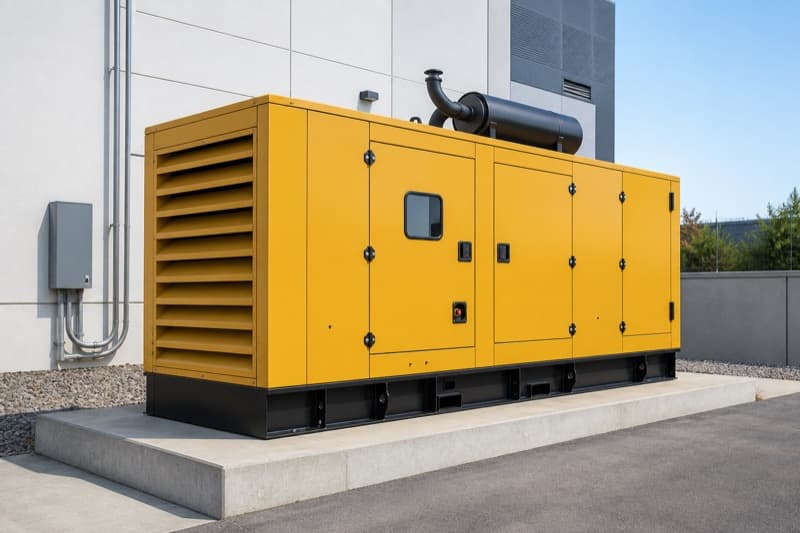
NLS sources resistive load banks (for straightforward kW loading, typically air-cooled or water-cooled depending on capacity) and combined resistive/reactive load banks (which add an inductive or capacitive element to test power factor and reactive load response as well as raw kW), portable trailer-mounted or fixed-installation units, sized from tens of kW up to multi-megawatt capacity for large industrial and data center gensets. Load steps are typically adjustable in 5-10% increments so a technician can ramp load up gradually rather than slamming the full rated load on at once.
On Saudi projects, load banks show up at three points in a genset's life: factory or site acceptance testing when a new set is commissioned, to prove it actually delivers its nameplate rating before handover; periodic load testing on hospital standby sets, where NFPA 110 calls for a monthly test under load (a no-load start-and-run does not satisfy it) to catch wet stacking and confirm the set can carry a real load if called on; and troubleshooting, where a load bank isolates whether a performance complaint is coming from the generator itself or from the site's actual load and wiring.
Sourcing follows NLS's standard process: send the generator's kVA rating, the load percentage steps the test protocol calls for, and whether the test needs a reactive load element or resistive kW loading alone, and NLS returns a priced quote in USD, either for a rental unit for a one-time commissioning test or a purchased unit for a facility that runs its own recurring NFPA 110 load tests. Rental load banks for a single commissioning event typically source faster than a purchased unit sized and specified for a facility's long-term testing program.
Specifications
- ✓Types: resistive (kW only) and resistive/reactive (kW plus kVAR) load banks
- ✓Cooling: air-cooled for smaller/portable units, water-cooled for high-capacity fixed installations
- ✓Capacity range: tens of kW up to multi-megawatt, portable trailer-mounted or fixed installation
- ✓Load steps adjustable in 5-10% increments for controlled ramp-up testing
- ✓Used for factory/site acceptance testing, NFPA 110 monthly load testing, and fault diagnosis
Frequently Asked Questions
Why does a standby generator need to be tested with a load bank instead of its real load?+
A standby generator's real site load only shows up during an actual utility outage, so day-to-day it often runs at partial load or not at all. A load bank applies a controlled load directly to the generator so it can be run and proven at 100% of its rated output on a schedule, catching problems like wet stacking that low-load running can hide.
Does NFPA 110 require a load bank test for hospital generators?+
NFPA 110 calls for a monthly test under load for emergency and standby power systems, which a no-load start-and-run check does not satisfy. Where the facility's real load doesn't reach a meaningful percentage of the generator's rating during the test, a load bank is used to apply that load artificially and satisfy the requirement.
Can I rent a load bank for a one-time generator acceptance test in Saudi Arabia?+
Yes. NLS sources load banks both as a rental for a single commissioning or acceptance test and as a purchased unit for a facility running its own recurring load-test program, sized to the generator's kVA rating and the load percentage steps the test protocol calls for.
Who supplies Load Banks in Saudi Arabia?+
NLS Power (Northlane Solutions Company) supplies Load Banks across Saudi Arabia, including Riyadh, Jeddah, Dammam and Jubail. Send your specification and quantities to info@nlspower.com or info@northlanesolution.com for a quotation.