Motor Control Centers
A motor control center groups the starters, contactors and protection for every motor on a plant into one factory-built assembly instead of scattered local panels. NLS Power sources MCCs built to IEC 61439-2, with fixed or withdrawable starter modules, sized for pumping stations, HVAC plant rooms and process areas on Saudi industrial and utility projects.
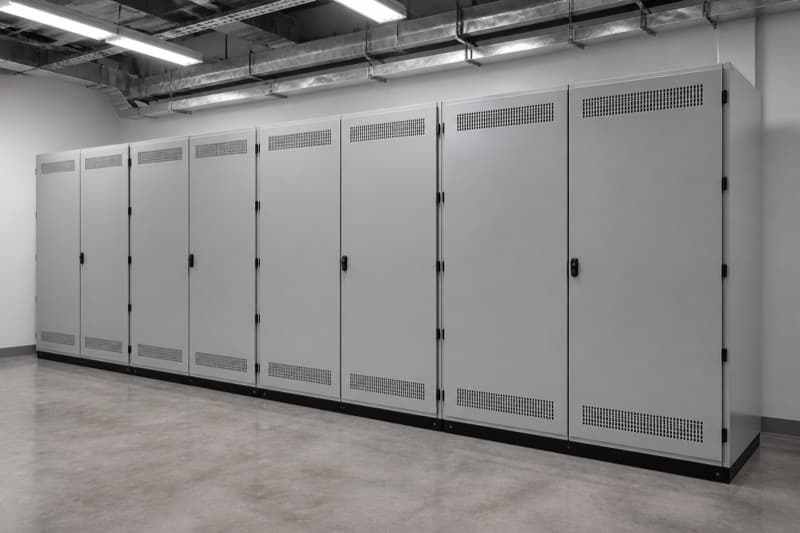
A motor control center (MCC) is a single lineup of vertical sections, each holding a set of motor starter units, in place of running a separate local starter panel next to every pump, fan or compressor on a site. Centralizing the starters cuts cable runs back to the main switchboard, puts every motor's protection and control in one place for an operator to monitor, and makes future motor changes a matter of swapping a module rather than rewiring a room.
Each starter unit inside the MCC combines a contactor or soft starter, an overload or motor protection relay, and often a variable frequency drive for motors that need speed control rather than fixed-speed run. Units are built as fixed, drawout, or a mix of both: drawout units let a faulty starter be pulled and replaced within minutes without shutting down the busbar feeding the rest of the lineup, which matters on a water treatment plant or a hospital chiller room that cannot tolerate an extended outage on unrelated equipment.
IEC 61439-2 governs the assembly the same way it governs LV switchgear, and form of separation applies here too, with Form 4 construction common on MCCs feeding critical rotating equipment where a unit needs to be withdrawn live. Communication is increasingly standard rather than optional: intelligent MCCs report starter status, current draw and trip history over Modbus RTU or a similar protocol back to a plant SCADA or BMS, which turns the MCC into a monitoring point rather than a black box that only shows a red or green light.
NLS Power sources MCCs sized against the motor schedule for pumping stations, HVAC plant rooms, water and wastewater treatment, and general industrial process areas across Saudi projects, in fixed or withdrawable construction to IEC 61439-2 and IEC 60947-4-1 for the starter components themselves. Quoting starts from the motor list: kW rating, starting method, and duty cycle for each motor, plus the required form of separation and any communication protocol; NLS Power returns pricing in USD with delivery scheduled against the plant room's installation sequence.
Specifications
- ✓Assembly type tested to IEC 61439-2, starter components to IEC 60947-4-1
- ✓Fixed, withdrawable (drawout), or mixed construction per section
- ✓Form of separation up to Form 4 for units requiring live withdrawal on critical duty motors
- ✓Starter types: direct-on-line, star-delta, soft starter, and variable frequency drive units
- ✓Optional intelligent MCC with Modbus RTU/TCP communication to SCADA or BMS
- ✓Sized from the project motor schedule: kW rating, starting method and duty cycle per motor
Frequently Asked Questions
What's the advantage of an MCC over local starter panels?+
One centralized MCC cuts cable runs, puts every motor's protection and status in one monitored location, and lets a faulty starter be replaced as a module rather than a full local panel rebuild, especially on drawout construction.
Who supplies motor control centers for industrial projects in Saudi Arabia?+
NLS Power sources MCCs built to IEC 61439-2, sized against the project's motor schedule, for pumping stations, HVAC plant rooms and process areas across Saudi industrial and utility sites.
Can a starter unit be replaced without shutting down the whole MCC?+
On drawout (withdrawable) construction, yes. The faulty unit is racked out and a spare racked in while the busbar feeding the rest of the lineup stays energized, which is why critical duty motors usually specify drawout rather than fixed units.
Who supplies Motor Control Centers in Saudi Arabia?+
NLS Power (Northlane Solutions Company) supplies Motor Control Centers across Saudi Arabia, including Riyadh, Jeddah, Dammam and Jubail. Send your specification and quantities to info@nlspower.com or info@northlanesolution.com for a quotation.