Unit Substations
A unit substation assembles MV switchgear, transformer and LV switchboard as coordinated equipment for a building's own electrical room, rather than a free-standing outdoor kiosk. NLS Power sources and supplies unit substations for high-rise towers, hospitals and industrial plants across Saudi Arabia, engineered so protection settings between the MV and LV sides are coordinated before equipment reaches site.
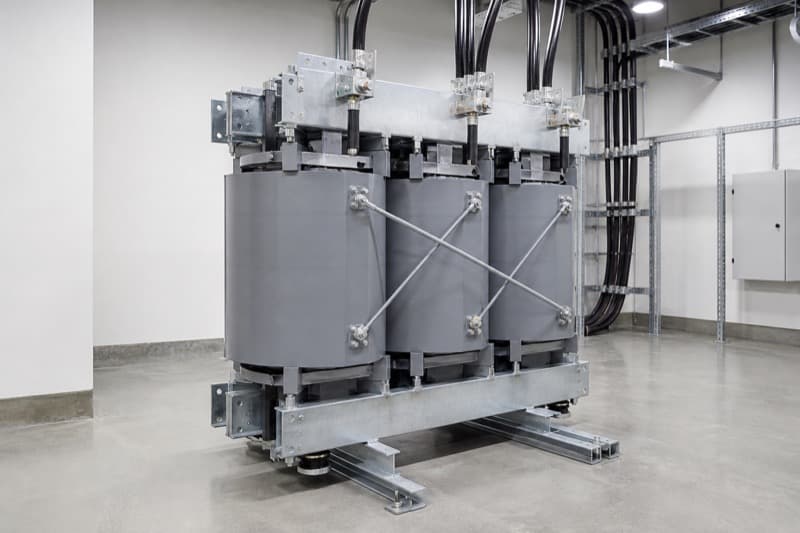
A unit substation, sometimes called a unitized substation, is the indoor counterpart to a package substation: MV switchgear, transformer and LV switchboard designed and factory-coordinated as one system, but built for installation inside a purpose-built electrical room within a building rather than as a free-standing outdoor enclosure. The distinction matters on high-rise and campus-style projects, where a building's electrical room is part of the architectural design from the start and the equipment inside it needs to fit that footprint exactly, not the other way around.
The core value of a unit substation over separately procured MV switchgear, transformer and LV panel is coordination. Protection relay settings on the MV side, the transformer's impedance and vector group, and the LV switchboard's breaker ratings are all specified and, where the scope allows, factory-tested together as a system, rather than left for the site team to reconcile between three different manufacturers' documentation during commissioning. On a hospital or data centre project where an uncoordinated trip means a life-safety or business-continuity failure, this coordination is not a convenience, it's the point of specifying a unit substation in the first place.
Saudi high-rise and industrial projects typically place unit substations at basement level or on a dedicated electrical floor, sized for the building's connected load plus a growth allowance, with SEC metering integrated into the LV switchboard or a dedicated compartment depending on the connection arrangement the utility approves. Ventilation and heat rejection for the room, as well as for the equipment, need to be designed together, since a unit substation room in Saudi ambient conditions can run hot even with the transformer's own cooling working correctly.
NLS Power sources and supplies unit substation equipment sets matched to a project's single-line diagram, load schedule and building electrical room layout.
Specifications
- ✓Configuration: MV switchgear, transformer and LV switchboard specified and coordinated as one system, for indoor installation
- ✓Protection coordination: MV relay settings, transformer impedance and LV breaker ratings aligned before site delivery
- ✓Cooling class: transformer cooling (AN/AF for dry-type, ONAN/ONAF for oil-immersed) matched to room ventilation design
- ✓Metering: SEC metering point integrated into the LV switchboard or a dedicated compartment per connection approval
- ✓Typical location: basement or dedicated electrical floor in high-rise, hospital and industrial building projects
- ✓Standards referenced: IEC 60076 (transformer), IEC 61439-1 (LV switchboard), IEC 62271 (MV switchgear)
Frequently Asked Questions
What's the difference between a unit substation and a package substation?+
A package substation is a free-standing, weatherproof outdoor enclosure built to IEC 62271-202. A unit substation is the same MV switchgear, transformer and LV switchboard combination, but designed for installation inside a building's own dedicated electrical room rather than as a standalone outdoor kiosk.
Why coordinate a unit substation as one system instead of buying equipment separately?+
Because the MV protection settings, transformer characteristics and LV breaker ratings all interact, and reconciling three different manufacturers' documentation on site during commissioning is where uncoordinated trips and delays usually come from. Specifying it as one coordinated system pushes that reconciliation to the design stage instead.
Where does a unit substation typically sit in a Saudi high-rise building?+
Usually in the basement or on a dedicated electrical floor, sized for the building's connected load plus growth allowance. Room ventilation needs to be designed alongside the equipment, since Saudi ambient conditions can push room temperature up even when the transformer's own cooling is working as specified.
Who supplies Unit Substations in Saudi Arabia?+
NLS Power (Northlane Solutions Company) supplies Unit Substations across Saudi Arabia, including Riyadh, Jeddah, Dammam and Jubail. Send your specification and quantities to info@nlspower.com or info@northlanesolution.com for a quotation.