
Posted on 2026-10-07
Your Complete Guide to mv switchgear in Saudi Arabia
Medium voltage (MV) switchgear is the equipment that connects, protects and isolates circuits operating between roughly 1 kV and 36 kV. It sits between the utility connection or generation and the low voltage boards that feed the plant, so a wrong choice at this level affects the whole site. Selecting it comes down to matching the voltage class, the fault rating, the insulation type and the environment to the project, and then confirming the details with the network operator.
What MV switchgear includes
A switchgear lineup is a set of panels, each housing some combination of circuit breakers, switch-disconnectors, earthing switches, current and voltage transformers, protection relays and control wiring. The breaker interrupts fault current. The disconnector and earthing switch give a visible or verified isolation point so people can work safely downstream. The relay watches current and voltage and tells the breaker when to trip.
Common types
- Air-insulated switchgear (AIS). Uses air as the insulating medium. It is the traditional and most widely used type, easier to inspect and maintain, but it needs more floor space.
- Gas-insulated switchgear (GIS). Uses sealed SF6 gas, which allows a compact footprint and good performance in polluted or dusty surroundings. SF6 is a strong greenhouse gas, so ask about leakage rates and end-of-life handling.
- Vacuum circuit breakers. The interrupting technology in most modern MV panels, known for long service life and low maintenance. They are built into both AIS and GIS designs.
- Ring main units (RMUs). Compact units used in secondary distribution to switch and protect cable rings, often installed next to a distribution transformer.
Selecting MV switchgear for a Saudi project
Start with the nominal system voltage. Confirm it from the utility connection agreement or the plant single-line diagram instead of assuming it, because plants and utility feeders in the Kingdom run at a range of voltages, including 11 kV, 13.8 kV and 33 kV.
Next, set the short-circuit rating from a fault-level study, not from a rule of thumb. The breaker must be able to interrupt the prospective fault current at the point of installation, with a margin, and the busbars must withstand it for the rated duration. Rated values are standardised, and the study tells you which step you need.
Then look at the environment. Dust, high ambient temperature and solar load affect the switchgear room more than the panel itself. Check the temperature derating on the datasheet, the enclosure protection rating, anti-condensation heaters, and how the room will be cooled and filtered. Near the coast, humidity and salt call for a corrosion-resistant finish and sealed designs.
Finally, check the protection and safety features:
- Protection functions. Over-current, earth-fault and, where needed, directional and differential protection, with relay settings coordinated with the utility.
- Arc fault protection. Internal arc classification under IEC 62271-200 tells you how the panel behaves if a fault occurs inside it, and pressure relief and exhaust routing must match the room layout.
- Interlocks. Mechanical and key interlocks that prevent wrong operations, plus clear open and closed indicators.
- Standards. Compliance with the IEC 62271 series for the equipment, and with the Saudi requirements that apply to the project and the utility.
Installation and commissioning issues
Dust coats insulation and contacts and weakens dielectric performance, so seal cable entries, filter the room air and set up a cleaning routine. Extreme daytime temperatures push equipment toward its thermal limit, which is why the room design and ventilation get as much attention as the panel. Earthing needs to follow the project specification and the utility requirement, and the earthing test results should be recorded.
Commissioning normally includes insulation resistance tests, contact resistance, breaker timing, protection relay secondary injection and a functional check of every interlock and trip circuit. Where space is limited, compact modular lineups save floor area, but check access for maintenance and cable termination before you commit to a layout. Coordinate with the utility's engineers early, because they often specify the type of ring main unit, the metering arrangement or particular relay settings.
How NLS Power can help
NLS Power supplies MV switchgear and can package it with the Electrical Distribution service, so that cable sizing, earthing and protection studies line up with the switchgear selection. For projects that also need transformers or substations, see the Transformers & Substations service. Send the single-line diagram, the fault level, the voltage class and the site conditions with your enquiry. The offer states the lead time for the specific configuration, so compare it across quotations.
FAQ
What voltage range does MV switchgear cover?
MV switchgear typically covers about 1 kV to 36 kV, though the IEC 62271 series extends higher. The voltages you will meet on Saudi projects depend on the plant and the utility connection, and are confirmed from the single-line diagram.
How do I determine the required breaking capacity?
Run a short-circuit study at the installation point to find the prospective fault current, then select a breaker and busbar rating at or above that value, with the duration the study specifies. The rating is set by the study, not by a general rule.
Are there special certifications for equipment used in Saudi Arabia?
Look for compliance with the IEC 62271 series for the switchgear itself, and ask the supplier which Saudi requirements apply to your product group. Type test reports and internal arc test reports should be available on request.
Can NLS Power provide installation support?
Ask in the enquiry. The scope of installation, commissioning and testing support is stated in the offer for each project, so you can confirm what is included before you place an order.
Sources
- https://news.google.com/rss/articles/CBMiswFBVV95cUxPUE51b2g5S3c4amc1eExLM3JyM0RXUWFMa3Y1WGxDc3FlbzBVLXNYZHRfendxMnVoOXFOeFdIVXIyT00tejRYWS1oTE5MTTM0ckgxNWEzcV9VN1ItZ2RHQ2pnQXA3a0ZvbUlnNExZTHUwVWVxZ21MX0JJSzhSMGRWOFM3VkNzWXE4NkFpeU1XX2dhelVlMTJsQ2c3V0NxYkw1ekxFVHBweVVyaVdNdncwZVlUNA?oc=5
- https://news.google.com/rss/articles/CBMiogFBVV95cUxOdlFCSGt3VERKaTdybTRqQXNTLW42RjZGUlZlbW51MnppYWNxdmVEQ2RGMmdaR1lTZXV6VXVyenJNSDA4di1iWDZ2NHQwcFRsd2pXaHZ1dE9Yb215aFZ0VmJYeFBpNHJTNzdpWktBOHZzMS1hNUVrdGxQOUhJNks2cGJwQ3R4d01tb1o5eUt2a0RuSzdJMHRfTkJYV1J6RG1Jc0E?oc=5
- https://news.google.com/rss/articles/CBMikgFBVV95cUxOdHpvVmRaSnhWYVhQb3huMTJBVUx3ZWwyVnBubkMwOEctVnRZX0dmZUNncnZseVdOSUduOFpmekFYU3BneGhjSFFZTVBJb0ZhMkZrbzY1ZWdwNmEyZGR2ZnRLTUlTSkFwYlJ0akFzZlEzWGVOY1VjNmNlTWxUbVB0Z19uT2VONFA0TmpfQ0txWFBOdw?oc=5
Related products
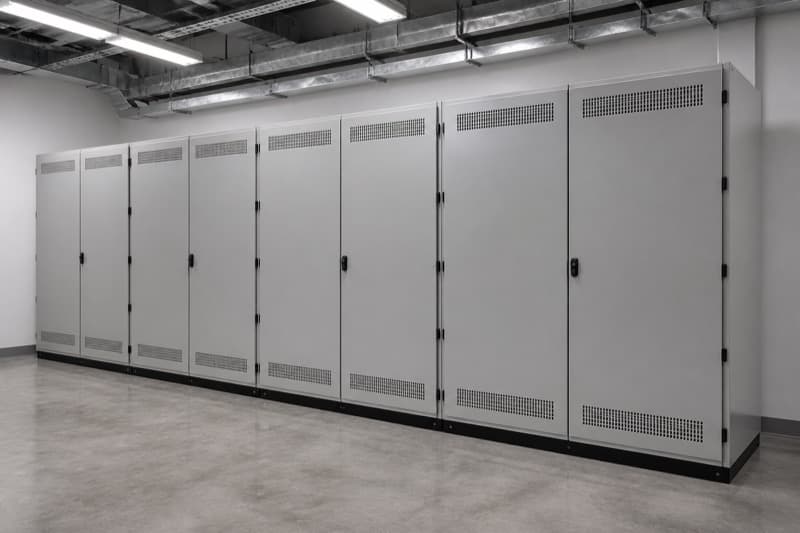
MV Switchgear
MV switchgear switches and protects power at medium voltage, typically 13.8kV or 33kV on SEC-fed Saudi sites, ahead of the step-down transformer that feeds the LV board. NLS Power sources metal-enclosed MV switchgear built to IEC 62271-200, vacuum circuit breaker technology, and internal arc classification for substation and plant rooms.
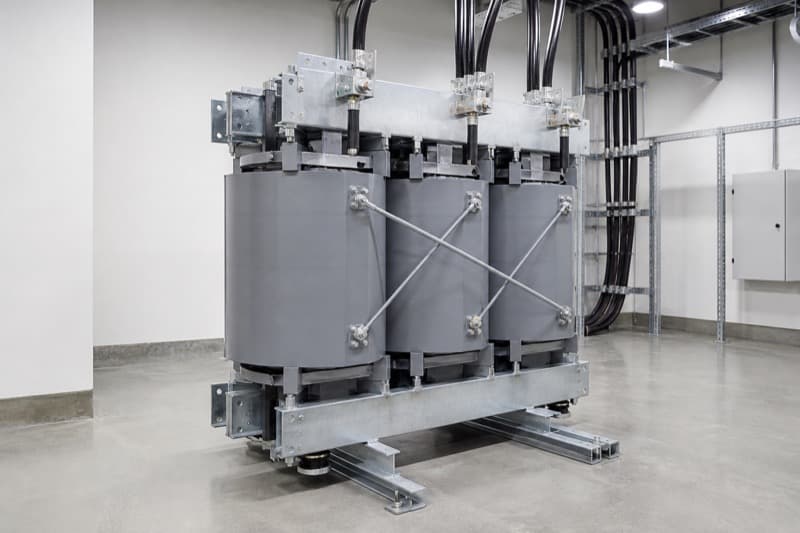
Ring Main Units (RMUs)
A ring main unit is a compact MV switchgear panel, usually three-way, that loops a medium voltage ring between substations so a fault on one section can be isolated without cutting power to the rest of the loop. NLS Power sources and supplies RMUs built to IEC 62271-200 for compound, industrial park and campus distribution networks across Saudi Arabia.
LV Switchgear
LV switchgear is the factory-built assembly of circuit breakers, busbars and protection devices that distributes power at 400/415V, the standard low voltage level on Saudi projects. NLS Power sources LV switchgear built to IEC 61439-1/2 type tested designs, sized to the short circuit rating and form of separation the project's system study calls for.
Motor Control Centers
A motor control center groups the starters, contactors and protection for every motor on a plant into one factory-built assembly instead of scattered local panels. NLS Power sources MCCs built to IEC 61439-2, with fixed or withdrawable starter modules, sized for pumping stations, HVAC plant rooms and process areas on Saudi industrial and utility projects.