
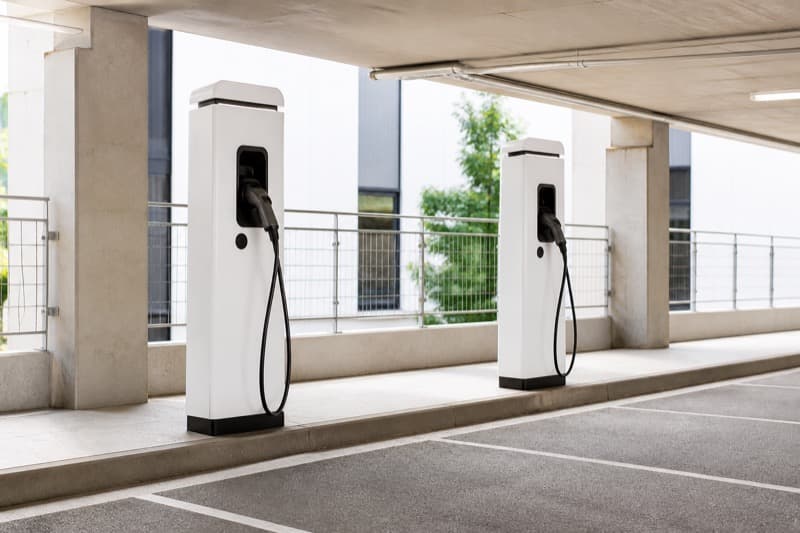
EV Charging Management Software
EV charging management software runs on the OCPP protocol to monitor, control and bill charge points remotely, from a single wallbox to a multi-site network, independent of hardware brand. NLS Power sources and supplies OCPP-compliant back-end platforms alongside its charging hardware for Saudi projects that need remote monitoring, access control or usage billing.
Charging management software is the layer that turns a charger from a piece of standalone hardware into a monitored, controllable, billable asset. It runs on the OCPP protocol (Open Charge Point Protocol), now standard across the industry precisely so a site isn't locked into one hardware manufacturer's proprietary back end. A charge point management system built on OCPP 1.6 or the newer 2.0.1 talks to chargers from multiple brands the same way, which matters on any project that adds capacity over several phases and doesn't want every new charger to match the first vendor.
The practical functions a site actually uses fall into a few categories: remote monitoring and fault alerts so a facilities team knows a charger is down before a driver reports it, access control so charging is restricted to authorized vehicles or staff on a compound or fleet site, usage tracking and billing where a mall, hotel or office wants to recover electricity cost or offer charging as a paid amenity, and load management integration, since the software layer is usually what coordinates dynamic power sharing across a bank of chargers rather than the chargers doing it independently of each other.
For a multi-site operator, whether that's a retail chain, a hotel group or a fleet operator, a single management platform gives one dashboard across every location instead of separate logins per site, and it's the piece that turns scattered charging hardware into something resembling a network rather than a collection of individual boxes.
NLS Power sources and supplies OCPP-compliant charging management software alongside its hardware supply, configured for the access control, billing and reporting a project's operating model requires.
Specifications
- ✓Protocol: OCPP 1.6 or 2.0.1 for cross-brand charger communication
- ✓Core functions: remote monitoring, fault alerts, access control, usage tracking and billing
- ✓Load management integration: coordinates dynamic power sharing across multiple charge points from one platform
- ✓Multi-site management: single dashboard across several locations for chain, hotel group or fleet operators
- ✓Access control: RFID card, app or vehicle-ID based authorization for restricted charging
- ✓Deployment: cloud-hosted back-end, compatible with third-party OCPP-certified hardware, not locked to one brand
Frequently Asked Questions
What does EV charging management software do that the charger hardware alone doesn't?+
It adds remote monitoring, fault alerts, access control and usage billing on top of hardware that would otherwise just deliver power with no oversight. It's also usually the layer that coordinates load management across multiple chargers, rather than each unit acting independently.
Do I need OCPP-compliant software if I'm only installing a few chargers?+
Even a small site benefits from remote fault alerts, since a facilities team otherwise finds out a charger is down only when a driver complains. OCPP compliance also protects against being locked into one hardware brand if the site adds more chargers later.
Can one platform manage EV chargers across multiple Saudi locations?+
Yes, that's the main advantage for a retail chain, hotel group or fleet operator: one dashboard covers monitoring, billing and access control across every site instead of a separate login and system per location.
Who supplies EV Charging Management Software in Saudi Arabia?+
NLS Power (Northlane Solutions Company) supplies EV Charging Management Software across Saudi Arabia, including Riyadh, Jeddah, Dammam and Jubail. Send your specification and quantities to info@nlspower.com or info@northlanesolution.com for a quotation.