
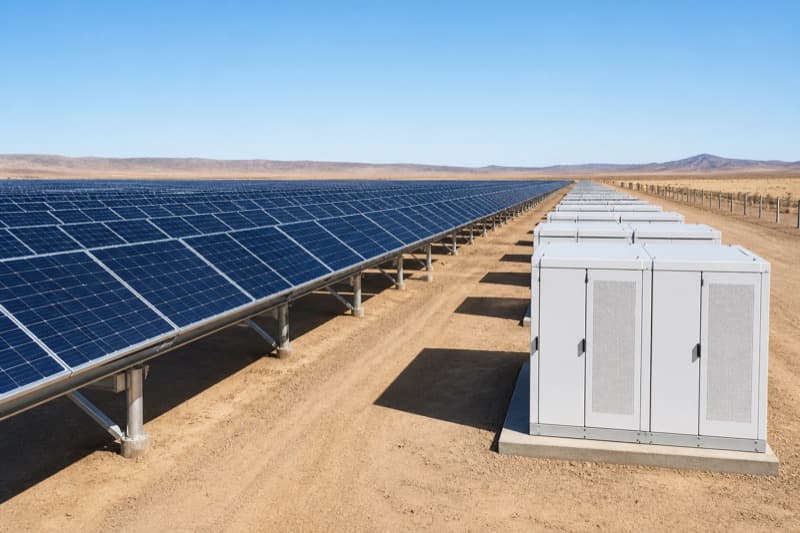
Hybrid Inverters
Hybrid inverters manage power flow between solar PV, battery storage, and the grid or a backup load panel from a single unit, switching automatically between modes. NLS sources hybrid inverters sized for combined PV and battery capacity, for commercial and residential projects across Saudi Arabia that need solar self-consumption with backup power during a grid outage.
A hybrid inverter combines the functions a standard grid-tied solar inverter and a separate battery inverter/charger would otherwise handle as two devices, managing DC input from PV modules, DC charge and discharge to a battery bank, and AC output to the building or the grid, all through one unit with one control system. This matters operationally because the modes a site actually runs in during a day, solar charging the battery while also feeding building load, battery discharging to cover an evening peak, or grid import topping up the battery overnight, all need to be handled by coordinated logic rather than separate devices each making an independent decision that might work against the others.
The defining capability a hybrid inverter adds over a plain grid-tied inverter is automatic backup switching: when grid supply fails, a hybrid inverter with battery capacity can island a defined backup load panel within its transfer time rating, keeping critical circuits powered without the delay or manual intervention a generator start would need. This makes hybrid inverters the standard choice for any Saudi project pairing solar with battery storage for genuine backup capability, as opposed to a pure grid-tied system that shuts down during a grid outage regardless of how much solar the array is producing at that moment, a safety requirement (anti-islanding) that protects utility line workers but means a standard grid-tied array gives zero backup value without a hybrid or battery-capable inverter.
Sizing a hybrid inverter covers three capacity figures at once: PV DC input capacity, battery charge/discharge power rating, and continuous AC output to both the grid-tied load and the backup panel. Saudi commercial and residential projects sizing hybrid systems need to size the backup panel deliberately, listing only the circuits that genuinely need power during an outage, since backup capacity is a real cost driver and oversizing the backup panel to cover the whole building erodes the battery runtime available for the circuits that actually matter.
Sourcing runs from a system design covering PV capacity, battery capacity, and the backup load list. A project team sends these three figures along with grid connection requirements, and NLS returns hybrid inverter selection and a priced quote in USD, with lead time set by capacity class and configuration.
Specifications
- ✓Manages PV charging, battery charge/discharge, and AC output through one integrated unit
- ✓Automatic backup switching isolates a defined load panel within a rated transfer time on grid failure
- ✓Sizing covers three figures: PV DC input, battery charge/discharge power, and continuous AC output
- ✓Backup load panel scoped deliberately to critical circuits, not the whole building, to preserve battery runtime
- ✓Anti-islanding compliance for the grid-tied mode; islanded operation only through the dedicated backup panel
- ✓Standards referenced: IEC 62109 safety and applicable grid interconnection requirements
Frequently Asked Questions
Who supplies hybrid solar inverters in Saudi Arabia?+
NLS sources hybrid inverters sized for combined PV and battery capacity, including automatic backup switching for a defined critical load panel, for commercial and residential solar-plus-storage projects across Saudi Arabia.
Does a standard grid-tied solar system provide backup power during an outage?+
No. Anti-islanding protection shuts a standard grid-tied array down during a grid outage regardless of solar production at that moment. A hybrid inverter with battery capacity is what lets a defined backup panel keep running when the grid fails.
What lead time should I expect for a hybrid inverter order in KSA?+
Lead time depends on capacity class and configuration, since hybrid inverters are sized against PV, battery, and backup load figures together. NLS confirms the figure once the system design is set.
Related products
Battery Energy Storage Systems
Battery energy storage systems (BESS) store DC electricity, typically from solar generation or off-peak grid supply, for later use during peak demand, an outage, or off-grid operation. NLS sources lithium iron phosphate (LFP) battery systems for their stability and cycle life in Saudi ambient conditions, sized from residential backup units to commercial and utility-scale containerized systems.
Solar Mounting Structures
Solar mounting structures hold PV modules at a fixed or tracking tilt angle, anchored to a roof, ground foundation, or carport frame. NLS sources fixed-tilt and single-axis tracker mounting systems engineered for Saudi wind loading and corrosion resistance, for rooftop, ground-mount, and carport solar installations across the Kingdom.
Solar Combiner Boxes
Solar combiner boxes bring multiple PV string DC outputs together into one or more consolidated feeders, with fusing and surge protection on each string before the feeder reaches the inverter. NLS sources combiner boxes rated for outdoor Saudi ambient conditions and dust ingress, for commercial and utility-scale ground-mount and rooftop solar installations across the Kingdom.
Off-Grid Solar Systems
Off-grid solar systems combine PV modules, battery storage, and an off-grid or hybrid inverter into a self-sufficient power source with no grid connection, sized against the site's daily load profile and lowest-sun days. NLS sources off-grid systems for remote Saudi sites, telecom towers, and construction camps where grid extension isn't practical or cost-effective.
Solar PV Modules
Solar PV modules convert sunlight directly into DC electricity through semiconductor cells wired into a weatherproof panel. NLS sources monocrystalline and polycrystalline PV modules certified to IEC 61215 and IEC 61730, rated for the high irradiance and soiling conditions of Saudi sites, for utility, commercial rooftop, and off-grid solar projects across the Kingdom.
Solar Inverters
Solar inverters convert DC power from PV modules into grid-compliant AC power, in string, central, or micro-inverter configurations. NLS sources grid-tied solar inverters rated for Saudi ambient conditions and derated for cell temperature effects, sized from residential string inverters to utility-scale central inverters, for commercial, industrial, and utility solar projects across the Kingdom.
Guides
Solar Plus Battery Storage Economics for Saudi Commercial Facilities
What actually drives solar plus battery storage payback for Saudi commercial facilities: tariff structure, self-consumption share, cell temperature derating, soiling losses, and when storage earns its cost.
Powering Saudi Arabia's Future: Grid Modernization & Renewables
Saudi Arabia's Vision 2030 demands advanced electrical grids for modernization and renewable integration. NLS Power offers solutions for a resilient energy future.