
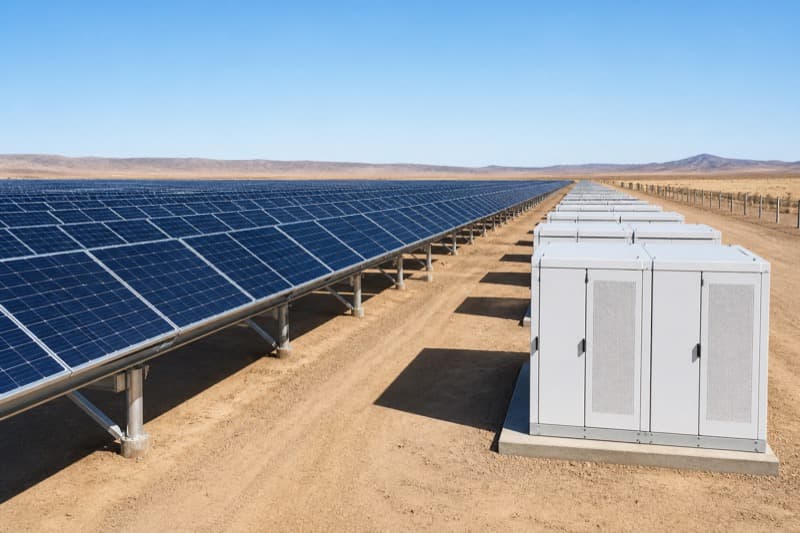
Solar Combiner Boxes
Solar combiner boxes bring multiple PV string DC outputs together into one or more consolidated feeders, with fusing and surge protection on each string before the feeder reaches the inverter. NLS sources combiner boxes rated for outdoor Saudi ambient conditions and dust ingress, for commercial and utility-scale ground-mount and rooftop solar installations across the Kingdom.
A solar combiner box sits between the PV module strings and the inverter, taking in multiple individual string DC feeds and consolidating them into fewer, larger conductors running the remaining distance to the inverter, which cuts the cable run and trenching cost a fully home-run string layout would otherwise need. Inside the box, each incoming string typically has its own fuse or circuit breaker sized to the string's maximum fault current, so a fault on one string trips only that string's protection device rather than taking down the whole combined feeder, and each string usually gets its own surge protection device to limit transient overvoltage from a nearby lightning strike reaching the inverter through the DC wiring.
Combiner boxes on Saudi installations, whether rooftop or ground-mount, sit outdoors in direct exposure to the same heat and dust conditions the rest of the array faces, which pushes two design requirements: an enclosure ingress protection rating adequate for dust and occasional wind-driven rain (commonly IP65 or better for outdoor DC combiner enclosures), and internal component derating for the ambient temperature the enclosure itself reaches under direct sun, since a sealed metal or polymer box in Saudi summer sun can run well above external ambient temperature, and fuses, breakers, and terminal blocks all carry their own thermal derating curves that need checking against the box's actual internal operating temperature rather than the outdoor air temperature.
String monitoring is an increasingly common feature specified alongside the basic fusing and surge protection function, where each string's current is measured individually and reported back to a monitoring platform, letting an O&M team spot an underperforming string, from a fault, partial shading, or soiling on one section of the array, without needing to physically test every string on site. On larger utility-scale arrays where hundreds of combiner boxes exist across the site, this monitoring capability materially cuts the diagnostic time behind any performance shortfall investigation.
Sourcing runs from a string layout and array design. A project's EPC or design engineer issues the number of strings per combiner, string fuse rating, and whether string-level monitoring is required, and NLS returns combiner box selection and a priced quote in USD, with lead time set by enclosure size, monitoring option, and total unit count across the array.
Specifications
- ✓Per-string fusing or circuit breakers sized to each string's maximum fault current
- ✓Per-string surge protection devices to limit transient overvoltage reaching the inverter
- ✓Enclosure ingress protection commonly IP65 or better for outdoor dust and wind-driven rain exposure
- ✓Internal component thermal derating checked against enclosure operating temperature under direct sun, not outdoor air temperature alone
- ✓Optional string-level current monitoring for O&M performance diagnostics
- ✓Standards referenced: IEC 61439 (enclosure) and applicable DC surge protection standards
Frequently Asked Questions
Who supplies solar combiner boxes in Saudi Arabia?+
NLS sources combiner boxes rated for outdoor dust and heat exposure, with per-string fusing, surge protection, and optional monitoring, for commercial and utility-scale solar installations across Saudi Arabia.
Why does enclosure temperature matter for combiner box components?+
A sealed combiner box in direct Saudi summer sun runs well above the outdoor air temperature, and internal fuses, breakers, and terminals all have their own thermal derating curves, so component selection has to account for the box's actual internal temperature, not the ambient air figure alone.
What lead time should I expect for combiner boxes in KSA?+
Lead time depends on enclosure size, whether string-level monitoring is included, and the total unit count across the array. NLS confirms the figure once the string layout and array design are set.
Who supplies Solar Combiner Boxes in Saudi Arabia?+
NLS Power (Northlane Solutions Company) supplies Solar Combiner Boxes across Saudi Arabia, including Riyadh, Jeddah, Dammam and Jubail. Send your specification and quantities to info@nlspower.com or info@northlanesolution.com for a quotation.