Off-Grid Solar Systems
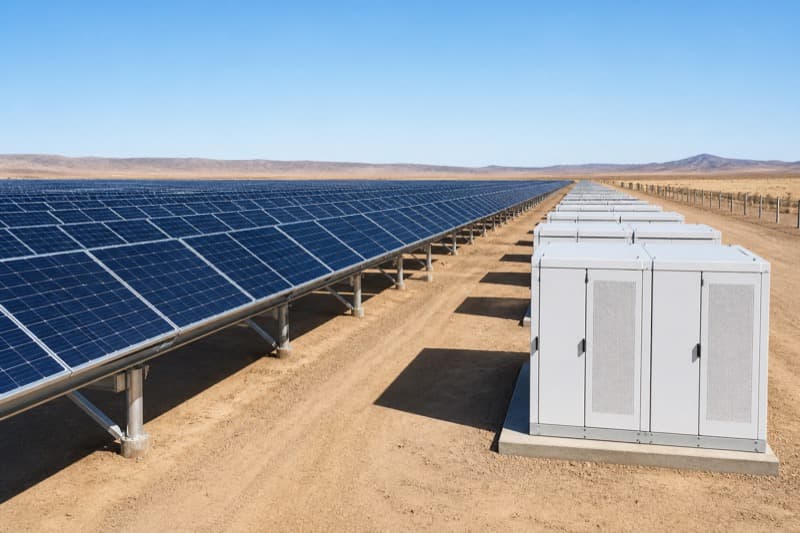
Off-grid solar systems combine PV modules, battery storage, and an off-grid or hybrid inverter into a self-sufficient power source with no grid connection, sized against the site's daily load profile and lowest-sun days. NLS sources off-grid systems for remote Saudi sites, telecom towers, and construction camps where grid extension isn't practical or cost-effective.
An off-grid solar system has to generate and store every unit of energy the site will ever consume, with no grid to fall back on when the sun doesn't cooperate, which makes its design process fundamentally different from a grid-tied system that simply offsets utility consumption. Sizing starts from an honest daily load profile: total energy consumption in kWh per day, the peak instantaneous power draw in kW, and how that load is distributed across the day, since a load that runs mostly at night (site lighting, security systems, telecom equipment) needs proportionally more battery capacity relative to array size than a load that runs mostly during daylight hours when the array is producing directly.
The critical design constraint on any off-grid system is autonomy: how many consecutive days of low or no sun the battery bank has to carry the full load without recharging. A telecom tower or remote monitoring station that can't tolerate downtime needs several days of autonomy sized against the worst realistic run of overcast or dust-storm-reduced sun the site's location sees historically, not an average clear-sky day. This autonomy requirement, more than the average daily energy figure, is usually what drives battery bank size upward, and getting it wrong shows up as a real outage months after commissioning, not as an obvious design flaw in the initial system spec.
Array sizing for off-grid systems typically uses a worst-month design approach: rather than sizing for average annual irradiance, the system is sized against the lowest-irradiance month the site experiences, since an off-grid system that only meets load on a sunny July day but falls short every December is not actually meeting its brief. A backup generator is a common companion to an off-grid solar-battery system rather than a competing choice, sized to cover the load during an extended low-sun stretch beyond what the battery autonomy was designed for, letting the solar-battery combination handle the vast majority of running hours while the generator remains a true backstop rather than the primary power source.
Common Saudi applications include telecom and monitoring equipment at remote tower sites beyond economical grid reach, security lighting and camera systems on construction camps and remote project sites, and water pumping or desalination equipment at agricultural or rural sites. Sourcing runs from a load profile and site solar resource assessment. A project team sends daily load in kWh, peak power draw, required autonomy days, and site location, and NLS returns a sized system, PV array, battery bank, and inverter, with a priced quote in USD and lead time set by system capacity and component availability.
Specifications
- ✓Sized from actual daily load profile (kWh/day and peak kW draw), not a generic reference load
- ✓Autonomy days sized against the site's worst realistic run of low-sun days, not average conditions
- ✓Array sized against the site's worst design month, not annual average irradiance
- ✓Off-grid or hybrid inverter with battery charge/discharge management and load prioritization
- ✓Backup generator commonly paired as a backstop for extended low-sun periods beyond battery autonomy
- ✓Standards referenced: IEC 62109 (inverter safety), IEC 61215/61730 (module qualification)
Frequently Asked Questions
Who supplies off-grid solar systems in Saudi Arabia?+
NLS sources sized off-grid solar-battery systems for remote telecom towers, construction camps, and rural or agricultural sites across Saudi Arabia, designed against the site's actual load profile and autonomy requirement.
How is battery autonomy determined for an off-grid solar system?+
Autonomy is sized against the worst realistic run of consecutive low-sun days the site's location has historically seen, not an average clear-sky day, since that worst-case stretch is what the battery bank actually has to carry without recharging.
What lead time should I expect for an off-grid solar system in KSA?+
Lead time depends on system capacity and component availability across the PV array, battery bank, and inverter. NLS confirms the figure once the load profile and required autonomy days are set.
Who supplies Off-Grid Solar Systems in Saudi Arabia?+
NLS Power (Northlane Solutions Company) supplies Off-Grid Solar Systems across Saudi Arabia, including Riyadh, Jeddah, Dammam and Jubail. Send your specification and quantities to info@nlspower.com or info@northlanesolution.com for a quotation.