
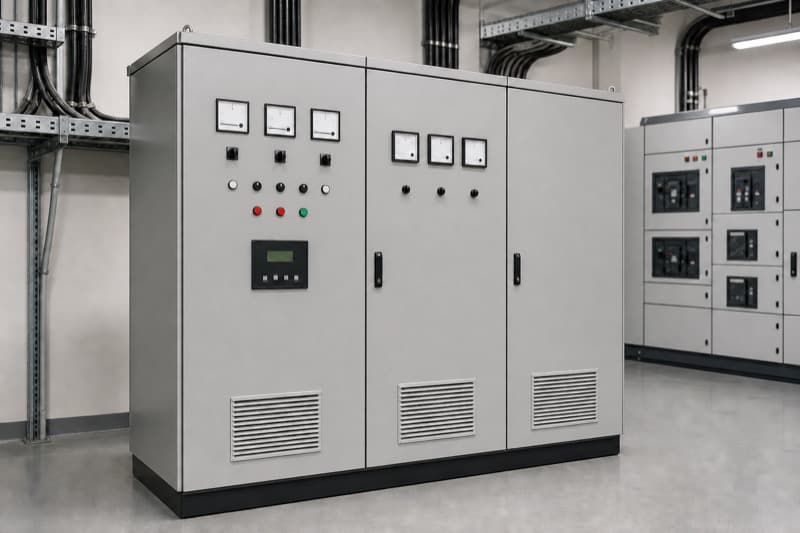
Power Quality Analyzers
Power quality analyzers measure voltage, current, harmonics, power factor, and transient events at a point in an electrical system, providing the data needed to diagnose a problem before specifying a correction. NLS sources portable and panel-mounted power quality analyzers for site surveys and continuous monitoring on industrial, commercial, and data centre installations across Saudi Arabia.
A power quality analyzer instruments a point in an electrical distribution system, capturing voltage, current, and their relationship over time in enough detail to characterize problems that a simple voltmeter or clamp meter can't see: harmonic distortion by frequency, power factor and its variation through the day, voltage sags and swells and their duration, and transient overvoltage events tied to a switching or lightning incident. This data is the actual evidence base for specifying any of the correction equipment power quality problems call for, a PFC bank, a harmonic filter, or a voltage stabilizer, since sizing any of that equipment off assumptions or nameplate data alone risks either an undersized fix that doesn't solve the problem or an oversized one that costs more than the actual issue justified.
Portable analyzers connect temporarily at a distribution board or load point for a survey period, typically a week or more to capture a representative range of the site's actual operating conditions across shift changes, equipment start-up cycles, and peak-demand periods, then get removed once the survey is complete. This suits a one-time diagnostic exercise: investigating a specific complaint (nuisance tripping, equipment failures, a suspected power factor penalty), or a pre-project baseline survey before specifying new correction equipment. Panel-mounted analyzers install permanently at a distribution board and feed continuous data to a local display or a building management system, suiting facilities that need ongoing visibility into power quality, commonly data centers, hospitals, and industrial sites where a developing power quality problem needs to be caught early rather than discovered after equipment damage or an outage.
Getting useful data from an analyzer survey depends on measuring at the right point in the system and for long enough to capture the actual problem condition rather than a snapshot during normal operation; a harmonic issue that only appears when a specific piece of equipment starts up, or a voltage sag that only shows during a particular process cycle, won't show up in a measurement window that misses those events. This is why a competent power quality survey scope specifies measurement duration and location against the actual complaint or design question being answered, not a fixed generic protocol applied regardless of the situation.
Sourcing runs from the diagnostic or monitoring need. A project team specifies whether a one-time portable survey or permanent panel-mounted monitoring is needed, the measurement points required, and any specific problem being investigated, and NLS returns analyzer selection and a priced quote in USD, with lead time set by unit type and quantity.
Specifications
- ✓Measures voltage, current, harmonics by frequency, power factor, and transient/sag/swell events
- ✓Portable units for temporary site surveys (typically week-plus duration to capture representative conditions)
- ✓Panel-mounted units for continuous monitoring, feeding local display or building management system
- ✓Survey scope (duration, measurement point) matched to the specific problem or design question
- ✓Data used as the evidence base for correctly sizing PFC banks, harmonic filters, or stabilizers
- ✓Standards referenced: IEC 61000-4-30 (power quality measurement methods)
Frequently Asked Questions
Who supplies power quality analyzers in Saudi Arabia?+
NLS sources portable analyzers for site surveys and panel-mounted analyzers for continuous monitoring, scoped to the measurement points and duration a specific problem or design question requires, for industrial, commercial, and data centre projects across Saudi Arabia.
Why measure power quality before specifying a correction like a PFC bank or filter?+
Sizing correction equipment off assumptions or nameplate data alone risks an undersized fix that doesn't solve the problem or an oversized one that costs more than justified. Actual measured data on harmonics, power factor, or voltage events gives the real evidence base for correct sizing.
What lead time should I expect for power quality analyzers in KSA?+
Lead time depends on unit type, portable or panel-mounted, and quantity. NLS confirms the figure once the diagnostic or monitoring need is set.
Who supplies Power Quality Analyzers in Saudi Arabia?+
NLS Power (Northlane Solutions Company) supplies Power Quality Analyzers across Saudi Arabia, including Riyadh, Jeddah, Dammam and Jubail. Send your specification and quantities to info@nlspower.com or info@northlanesolution.com for a quotation.