
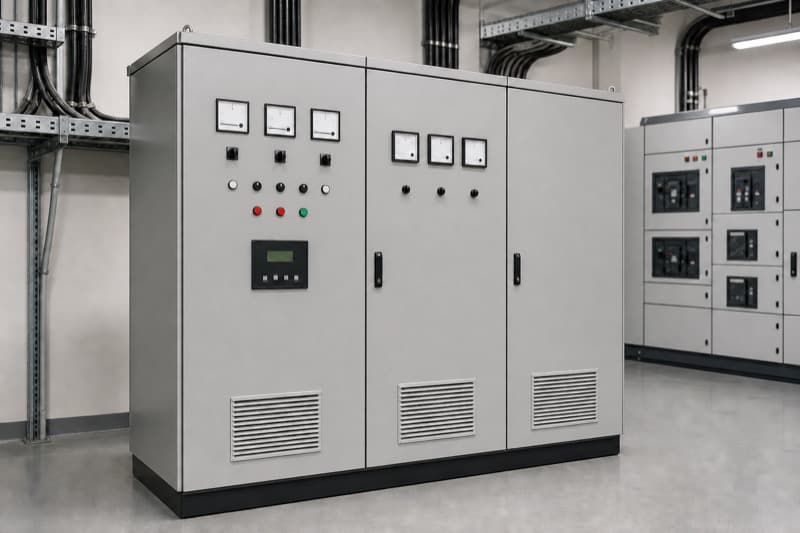
Surge Protection Devices
Surge protection devices (SPDs) clamp transient overvoltage from lightning strikes or switching events before it reaches connected equipment, installed at defined points in an electrical distribution system per IEC 61643 classification. NLS sources Type 1, Type 2, and Type 3 SPDs for main distribution boards, sub-panels, and sensitive equipment on industrial, commercial, and hospital installations across Saudi Arabia.
A surge protection device sits in parallel with the circuit it protects, normally presenting high impedance and doing nothing to the circuit's normal operation, until a transient overvoltage event, typically from a nearby lightning strike or a switching operation on the utility or site network, pushes voltage above the device's clamping threshold. At that point the SPD's internal components, most commonly metal oxide varistors, conduct the excess energy to ground almost instantly, limiting the voltage that actually reaches downstream equipment to a level the equipment's insulation and components can survive.
IEC 61643 classifies SPDs into types based on where in the distribution system they're installed and what surge energy level they're designed to handle. Type 1 devices install at the main incoming distribution board, sized to handle the high-energy partial lightning current that can enter a building's electrical system through a direct or nearby strike on the structure or its lightning protection system. Type 2 devices install at sub-distribution boards, handling the reduced but still significant surge energy that gets through after a Type 1 device has clamped the initial event, or handling switching-transient surges that don't involve lightning at all. Type 3 devices install close to, or built into, sensitive terminal equipment, providing the final, fine level of protection for the specific device it serves. A properly coordinated installation cascades all three types together, since a Type 3 device alone can't safely absorb the energy level a direct lightning event puts into a system, and a Type 1 device alone doesn't clamp voltage down to the tight level sensitive electronics need.
Saudi Arabia sees a real, if regionally variable, incidence of lightning activity, and sites with exposed rooftop equipment, tall structures, or locations in higher-lightning-density regions carry a correspondingly higher risk that surge protection at the distribution board level is worth specifying as standard practice rather than an optional add-on, particularly for hospital, data center, and industrial process control installations where equipment damage or downtime from a surge event carries real cost beyond the SPD replacement itself.
Sourcing runs from the distribution system's structure. A project's electrical consultant specifies SPD type and location per distribution board on the single-line diagram, and NLS returns SPD selection matched to the specified surge current rating (kA) and voltage protection level per type, with a priced quote in USD and lead time set by unit count and type classification.
Specifications
- ✓Classification per IEC 61643: Type 1 (main board, direct lightning current), Type 2 (sub-board), Type 3 (terminal equipment)
- ✓Cascaded coordination across types recommended for comprehensive protection from source to sensitive equipment
- ✓Surge current rating (kA) and voltage protection level specified per installation point on the single-line diagram
- ✓Metal oxide varistor (MOV) or spark-gap technology depending on type and application
- ✓Priority applications: hospital, data center, and industrial process control installations
- ✓Standards referenced: IEC 61643-11 (low voltage SPD requirements and test methods)
Frequently Asked Questions
Who supplies surge protection devices in Saudi Arabia?+
NLS sources Type 1, Type 2, and Type 3 SPDs classified to IEC 61643, sized to the surge current and voltage protection level a project's electrical consultant specifies, for hospital, data center, and industrial installations across Saudi Arabia.
What's the difference between Type 1, Type 2, and Type 3 SPDs?+
Type 1 installs at the main board to handle high-energy direct lightning current, Type 2 installs at sub-boards for reduced residual surge or switching transients, and Type 3 installs close to sensitive terminal equipment for the final fine level of protection. A coordinated system uses all three together.
What lead time should I expect for SPDs in KSA?+
Lead time depends on unit count and type classification across the distribution system. NLS confirms the figure once the single-line diagram specifying SPD locations and types is set.
Who supplies Surge Protection Devices in Saudi Arabia?+
NLS Power (Northlane Solutions Company) supplies Surge Protection Devices across Saudi Arabia, including Riyadh, Jeddah, Dammam and Jubail. Send your specification and quantities to info@nlspower.com or info@northlanesolution.com for a quotation.